Reports & Guides
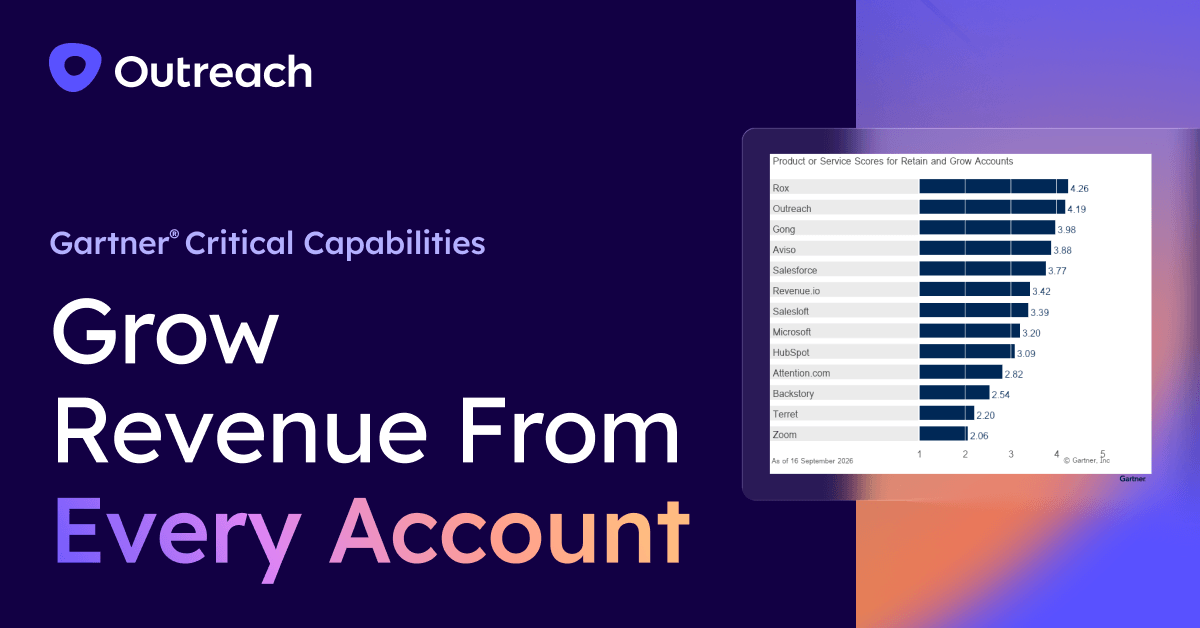
2026 Gartner® Critical Capabilities for Revenue Action Orchestration
Read more
The pressure to roll out AI agents is real, and the path to get there is far less clear. In McKinsey's 2025 State of AI survey, 23 percent of respondents said their organizations are scaling an agentic AI system somewhere in the enterprise, while many more are still testing.
For revenue leaders answering to a board that wants predictable growth, the next question comes fast. Should you build custom AI agents in-house, buy a platform that is ready to run or pursue a hybrid approach? It is one of the most consequential decisions you face as 2026 revenue trends raise the bar. The wrong call can cost you quarters of time, significant budget and hard-won trust with your board.
This guide gives you a clear framework to reason through the build vs buy AI agents decision with operational rigor. You will not find hype or oversimplified answers here, only the questions, trade-offs and decision criteria that help revenue operations, revenue and technology teams choose a path they can defend and scale.
This guide is written for the leaders accountable for the outcome:
If you are weighing an AI agent investment and want a shared reference your cross-functional stakeholders can rally around, this guide is built for you.
At Outreach, the agentic AI platform for revenue teams, we work alongside revenue teams facing this exact decision every day. We have seen where building in-house delivers, where it stalls and where a pre-built platform gets teams to value faster with less operational fragility. The pattern holds in outside research too: MIT NANDA found that AI tools purchased from specialized vendors succeed about 67 percent of the time, while internal builds succeed one-third as often.
This guide reflects that perspective honestly and makes the case for deciding with clear eyes, the right criteria and a full view of what each route asks of your team, your data and your timeline. If you have ever inherited a homegrown tool after the engineer who built it moved on, you already know why maintenance belongs in that view.
For teams already running on Outreach, the build question often becomes an activation question. Pre-built agents in Outreach Amplify, such as Research Agent, Revenue Agent and Deal Agent, work on the engagement, conversation and deal data already in the platform. Deal Agent, for example, surfaces recommended CRM updates for rep approval, and Revenue Agent runs prospecting within the controls you set. When a workflow is unique to your business, Agent Studio gives your team a visual canvas to configure custom agents for motions like inbound lead engagement or closed-lost reactivation, on the same governed data. Our AI value playbook walks through that activation path step by step.
You know your business better than any vendor does. Our goal is to give you the framework to apply that expertise to a decision that is hard to get right.
Agentic AI projects get canceled because of escalating costs, unclear business value or inadequate risk controls, according to Gartner. The firm predicts that over 40 percent of agentic AI projects will be canceled by the end of 2027 for those reasons. Gartner also describes most current agentic AI projects as early-stage experiments or proofs of concept driven by hype, which can hide what agents cost to run at scale. You can protect your own initiative by tying each agent to one measurable revenue outcome and naming who owns the result after the pilot.
Buying is usually cheaper in total cost of ownership, because a vendor spreads engineering, security and maintenance costs across many customers. A custom build carries costs that rarely appear in the first estimate: model usage fees, evaluation and testing, prompt and workflow upkeep, security reviews and rework every time a model provider changes its API. Building can still pay off when the agent encodes a process that is truly proprietary and drives competitive advantage. For most revenue workflows, such as research, prospecting and deal updates, the process is rarely proprietary enough to justify that cost.
A hybrid approach means buying a platform with pre-built agents and then configuring or extending it for the workflows that are specific to your business. Your team avoids building core infrastructure, such as data connections, permissions and audit logging, and spends its effort only on the logic that sets you apart. The main trade-off is dependency: your custom work lives inside the vendor's tooling, so portability matters. Before committing, ask how custom agents are versioned, who can edit them, how changes get reviewed and whether you can export configurations if your strategy changes later.
IT should ask where customer data is stored, which models process it and whether the vendor trains models on your data. Beyond those basics, request current security certifications, an explanation of role-based access controls and a sample of the audit log an agent produces when it acts or recommends an action. Ask how administrators can pause or throttle an agent, how the vendor handles model provider outages and what notice you receive before model changes. Clear, documented answers shorten security review and give your governance team evidence it can reuse for future AI purchases.