Blog
Sales forecasting 101: Definition, methods & best practices
June 10, 2026
Read more
May 29, 2026

Editor’s Note: The Icebox is Outreach Insights Group’s recurring benchmark series on cold outreach. This 2026 edition builds on our previous findings with updated benchmarks and new insights on how AI is transforming cold calling, cold emailing, and multi-channel prospecting.
Although it’s warming up outside, sellers know cold outreach is a year-round climate. And in 2026, cold outreach has to work harder than ever. Buyers today are flooded with noise across every channel, while AI-generated outreach has made generic outbound easier to ignore than ever before.
The best revenue teams aren’t simply adding more noise to the noise. They’re using AI, orchestration, and multi-channel workflows to create smarter, more targeted outreach motions powered by agentic AI, conversation intelligence, and orchestrated workflows.
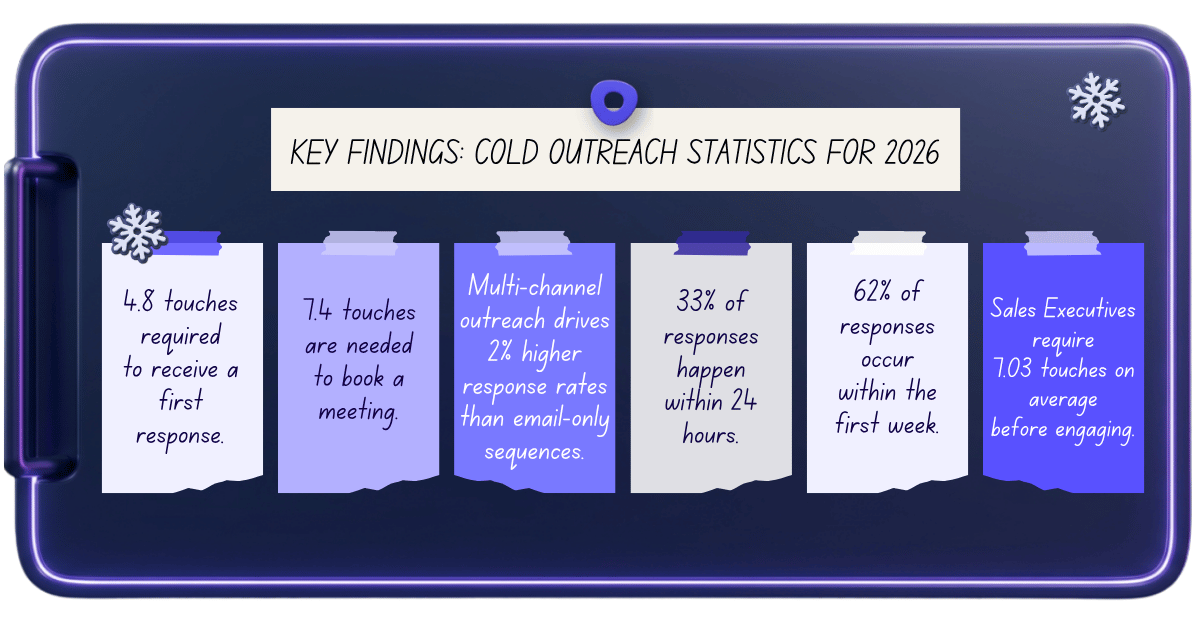
When we published our last Icebox report in 2024, the data told us that outbound was getting harder. Well, two years later, that trend has only accelerated. The average number of touches for a first response has climbed to 4.8, while booking a meeting now takes an average of 7.4 touches.
We're not ready to declare outbound dead, but the old playbook definitely is. Teams winning in 2026 are combining AI with precision, using smarter timing, personalization, and multi-channel engagement to break through the noise.
In this report, the Outreach Insights Group (OIG) analyzed anonymized outreach activity across emails, calls, LinkedIn tasks, responses, and meetings to better understand how cold outreach has evolved in the age of AI. By combining platform data with internal research, OIG uncovers how high-performing revenue teams are adapting their outbound strategies, where buyer behavior is shifting, and what actually drives engagement today.
We’ll break down how cold outreach has changed over the past two years, what the data reveals about modern buyer behavior, and the strategies leading revenue teams are using to improve response rates, book more meetings, and cut through the noise. Let’s plunge in!
Let’s level set: cold outreach isn’t dead. But the old playbook of blasting emails, mass-dialing prospects, and hoping volume alone wins attention is definitely on ice. Buyers today are saturated. Their inboxes are flooded with automated messages, templated AI copy, and “just bubbling this up” follow-ups that all start sounding the same.
But here’s the important distinction: buyers are still responding. They’re just far more selective about what earns their attention.
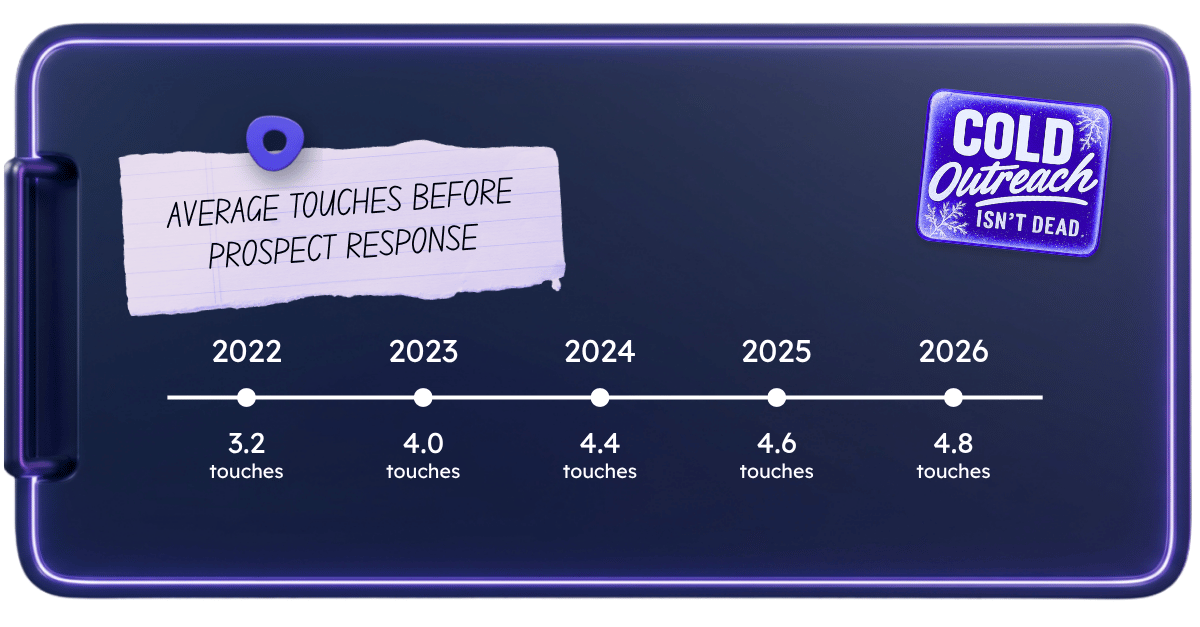
In 2022, it took an average of 3.2 touches to get a response. In 2026, that number climbed to 4.8. Meanwhile, booking a meeting now requires an average of 7.4 touches. On paper, that sounds discouraging. But the deeper story in the data tells us something much more interesting.
Half of all responses still happen within the first two touches.
That’s a huge signal for modern revenue teams. Good outreach still works quickly. Relevant, timely, well-targeted messaging can absolutely break through crowded inboxes. Poor outreach, on the other hand, gets filtered out almost immediately.
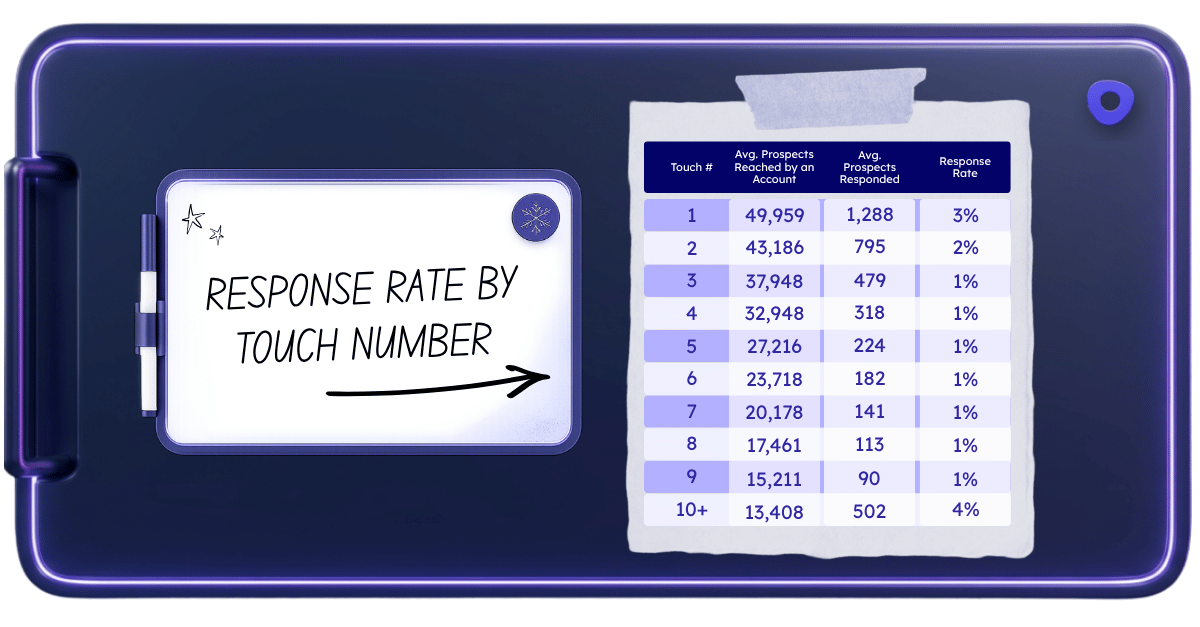
The numbers reinforce this pattern. The response rate on the very first touch sits at 3%, then declines rapidly with every additional interaction. In other words, more activity alone isn’t creating more engagement. Precision matters more than persistence.
If there’s one takeaway revenue teams should retire in 2026, it’s the idea that email alone can carry outbound. Buyers no longer live in just one channel, and the data shows outreach performs significantly better when teams combine email, calls, LinkedIn, and coordinated follow-up into a single motion.
According to the data, multi-channel sequences generated a 7% response rate, compared to only 5% for email-only sequences.
In modern outbound, AI isn’t replacing the rep, it’s acting as a teammate. Agentic AI helps sellers orchestrate the next best action across channels, surfacing the right timing, signals, and follow-up paths so outreach feels coordinated instead of repetitive.
Automate research, prioritize the right accounts, and coordinate the next best action across channels so sellers can focus on conversations that move pipeline forward.
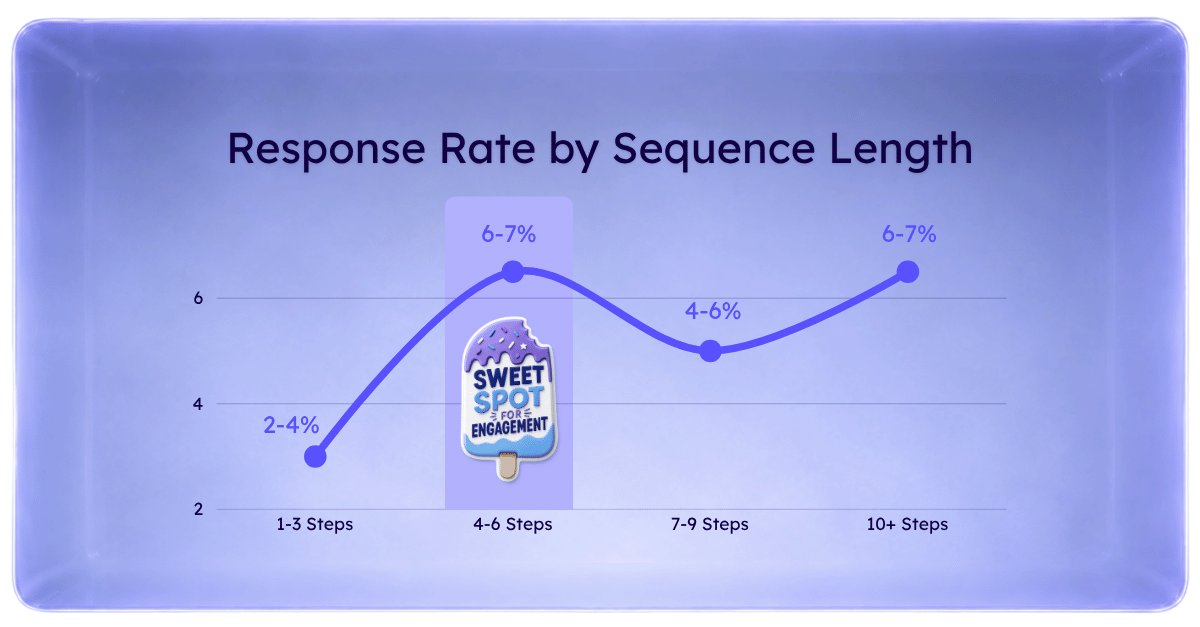
The data shows persistence still matters, just not in the old “spray and pray” sense. Short sequences underperformed.1–3 step sequences generated response rates as low as 2–4%, while 4–6 step sequences consistently drove the strongest engagement. Across customers, the average sequence now spans six to seven steps, proving modern outbound has moved far beyond the old “one email and done” approach.
What can you add to your ice chest for cooling? Successful outreach isn’t about overwhelming prospects with more touches. It’s about making each touch build naturally on the last — whether that’s a call after an email, a LinkedIn interaction tied to a trigger event, or a follow-up informed by conversation intelligence instead of another generic “checking in” message.
Cold calling isn’t dead. But random, unresearched cold calling definitely is.
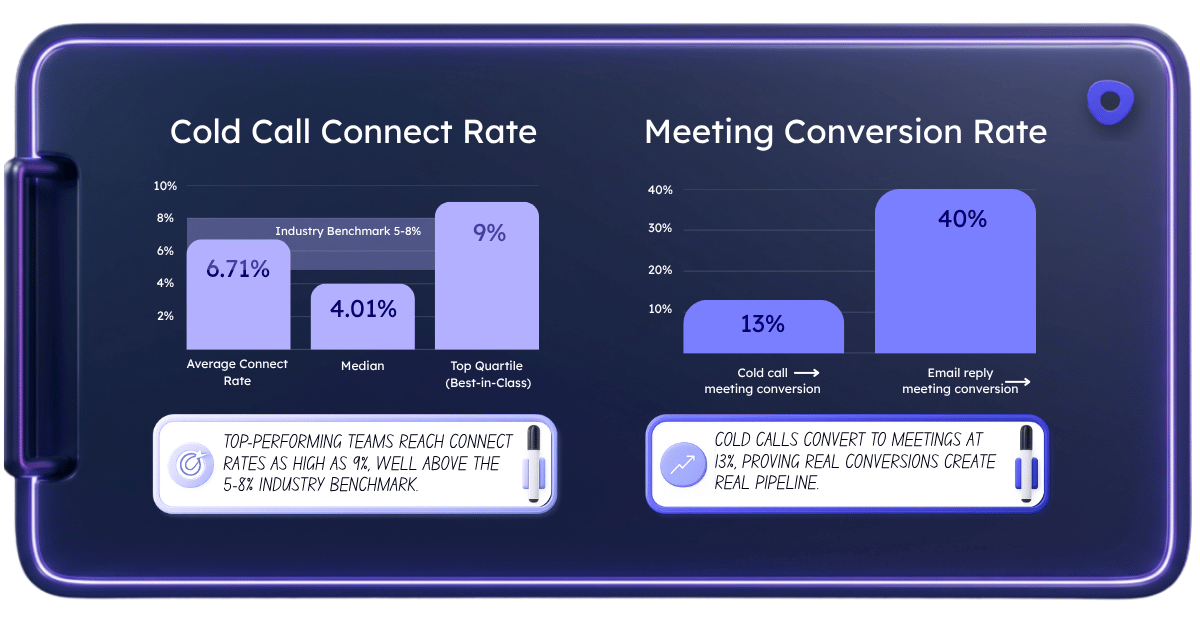
In fact, the data shows that calls still play an important role in modern outbound. Cold call connect rates averaged 6.71%, with top-performing teams reaching connect rates as high as 9%. More importantly, when reps do successfully connect with a buyer, calls still create meaningful momentum. Cold call-to-meeting conversion rates reached 13%, proving that conversations remain one of the strongest ways to build trust and accelerate engagement.
The key difference in 2026 is context. The best reps aren’t cold calling completely cold anymore. They’re reaching out after signals, using AI to personalize messaging, and building calls into broader multi-channel workflows that already include emails, LinkedIn touches, and previous engagement history.
Once a meeting does get booked, it becomes key for sellers to go into the call as armed as possible. That’s where agentic AI comes in play. Outreach’s Meeting Prep Agent brings together account history, stakeholder roles, deal risks, and recommended talking points so no seller goes into a call unprepared.
The timing behind outreach is becoming just as important as the message itself. Diving into the data, there are some surprisingly human patterns.
For calls, mornings still win. Morning call connect rates peaked at 5%, outperforming midday, afternoon, and evening outreach. The coffee is still fresh and buyers haven’t fully disappeared into meetings, Slack notifications, and overflowing inboxes yet.
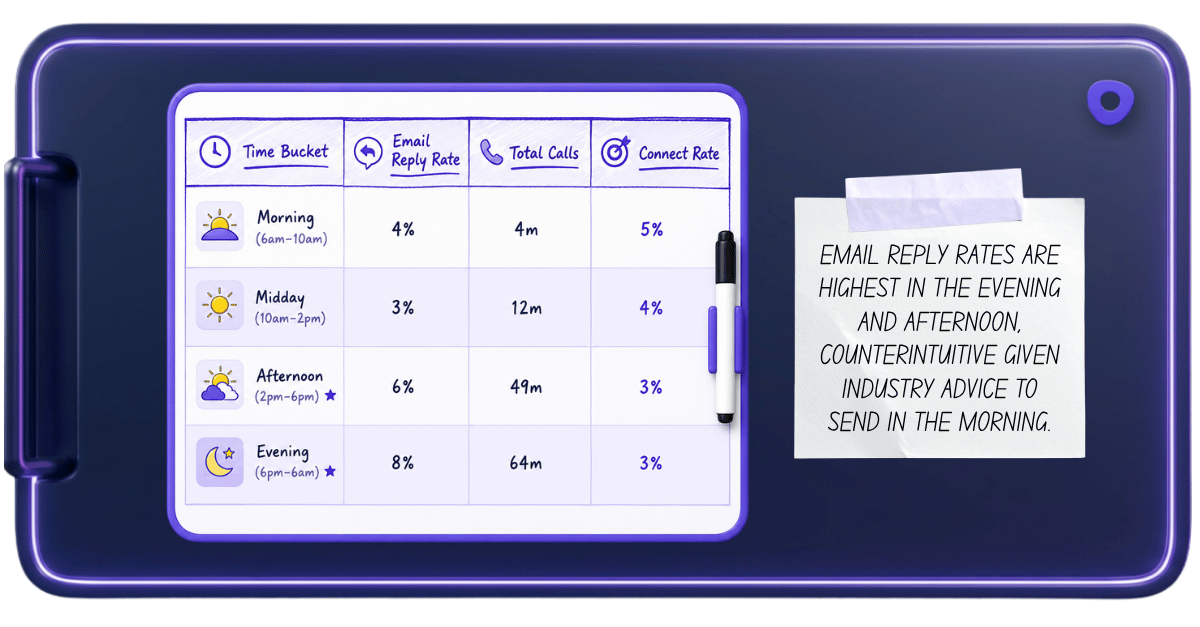
While conventional outbound wisdom has long favored early morning sends, reply rates actually climbed highest during the evening hours, reaching 8%. Afternoon emails also performed well at 6%.
The day of the week matters too. Internally, Tuesday and Wednesday produced the highest email reply rates at 7%, while weekends consistently underperformed. Customer data showed a flatter trend overall, but midweek still edged out as the strongest period for engagement.
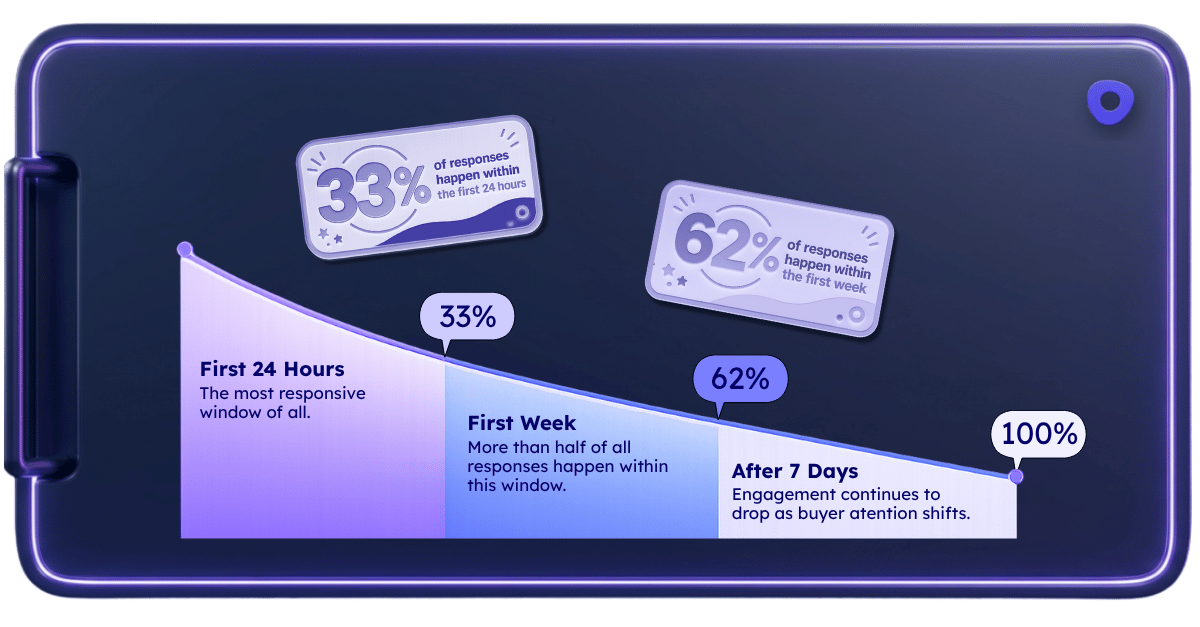
And perhaps most importantly: speed matters. One-third of all responses happen within the first 24 hours of outreach, and more than 62% occur within the first week. That means successful outbound today isn’t just about persistence, but reaching out during timely, relevant engagement windows before you lose your buyer’s attention span.
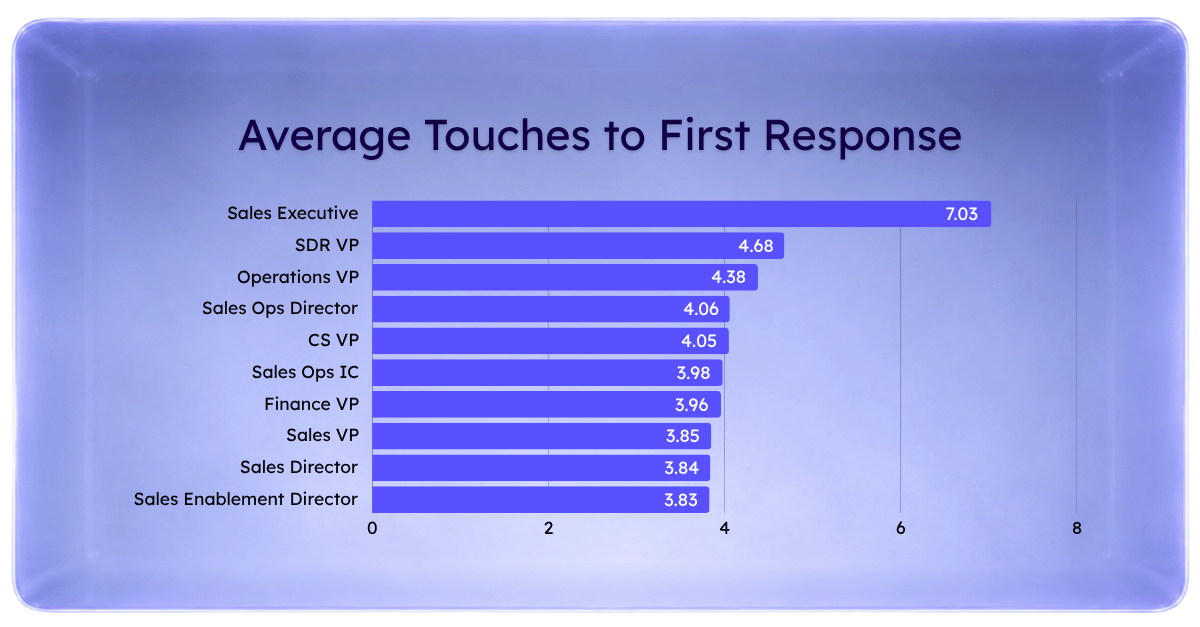
One of the most interesting patterns in the data isn't just how buyers responded, but who requires the most effort to engage.
From our data, we identified Sales Execs as the single hardest persona to reach, requiring an average of 7.03 touches before engagement. Finance VPs required 3.96 touches on average, while Sales VPs averaged 3.85 and Marketing VPs averaged 3.30 touches.
The data tells us that senior sales leaders, in particular, are becoming increasingly resistant to generic outbound. It makes sense. They’re surrounded by AI-generated prospecting messages every day, flooded with automated “personalized” outreach, and likely better than anyone else at recognizing repetitive sales tactics. You can’t sell poorly to a seller.
Modern outbound strategies can’t rely on static assumptions about buyer behavior. Different personas engage differently, and the most effective revenue teams are adapting their messaging, timing, and channel strategy based on how buyers actually respond today.
If this year’s Icebox data proves anything, it’s that cold outreach hasn’t frozen over. The teams winning in 2026 are building smarter, more coordinated outbound motions powered by AI, personalization, timing, and multi-channel engagement. As inboxes become increasingly crowded with AI-generated noise, buyers are becoming far more selective about what earns their attention.
That’s why the future of outbound isn’t fully automated — it’s intelligently orchestrated.
Modern revenue teams are using agentic AI as a co-pilot to guide next best actions, surface buyer signals, and coordinate outreach across channels. Combined with conversation intelligence and unified workflows, AI-powered revenue orchestration helps teams focus less on manual activity and more on high-value conversations that actually move deals forward.
So while the Icebox may still be cold, the best revenue teams know exactly how to warm buyers up.
Cold outreach is the practice of contacting prospects who have not previously engaged with your company using channels such as email, phone calls, LinkedIn, and other outbound touchpoints.
Yes. Cold outreach is still highly effective when it is personalized, well-timed, and coordinated across multiple channels. Outreach Insights Group data shows buyers are still responding, but they are more selective about what earns their attention.
According to Outreach Insights Group, it takes an average of 4.8 touches to receive a first response from a prospect.
The 2026 Icebox data shows it takes an average of 7.4 touches to book a meeting.
Yes. Cold call connect rates averaged 6.71%, and top-performing teams reached connect rates as high as 9%.
Outreach data found that 13% of connected cold calls converted into meetings.
Sequences with 4–6 steps generated the strongest response rates, making them the most effective balance of persistence and relevance.
Reply rates were highest during evening hours at 8%, with afternoon sends also performing well at 6%.
Morning calls delivered the highest connect rates, peaking at 5%.
Data showed multi-channel sequences generated a 7% response rate versus 5% for email-only sequences—2% higher.
Sales Executives were the hardest persona to engage, requiring an average of 7.03 touches before responding.
AI helps sellers research accounts, personalize messages, prioritize next steps, and coordinate outreach across channels to improve response rates and pipeline generation.
Outreach AI Agents automate research, personalization, and follow-up so sellers can focus on conversations that close deals.